EARTH'S OASES
SO MUCH MORE THAN IMAGINARY IMAGES
In our imaginary worlds, the terms oasis, desert and fata morgana are closely related. This is not least because of the astounding natural spectacles with the primordial elements of water, earth, sun and wind which have shaped the geography and life in large areas of our globe since time began. The amazing thing is how pure water turns a previously moribund surface into a virtually paradise-like island in the middle of the desert.
If you look up the word "oasis" in the dictionary, you will find terms like watering hole, desert island, green spot and haven. And no doubt original and purpose-made patches of vegetation have always been central places of refuge and relaxing havens for people and numerous animals, which, living in barren desert regions, are faced with mighty challenges. For alongside the extreme changes in temperature, extremely dry air and very strong sunlight, the lack of drinking water poses a deadly danger, to say nothing of the cooling benefits that the essential liquid has to offer in such hot climatic zones. Thus in contrast to the perpetual wandering way of life of the nomads, the cultivation of oases provides an acceptable basis for life by guaranteeing access to the Earth's natural water supplies.
Water: The elixir of life
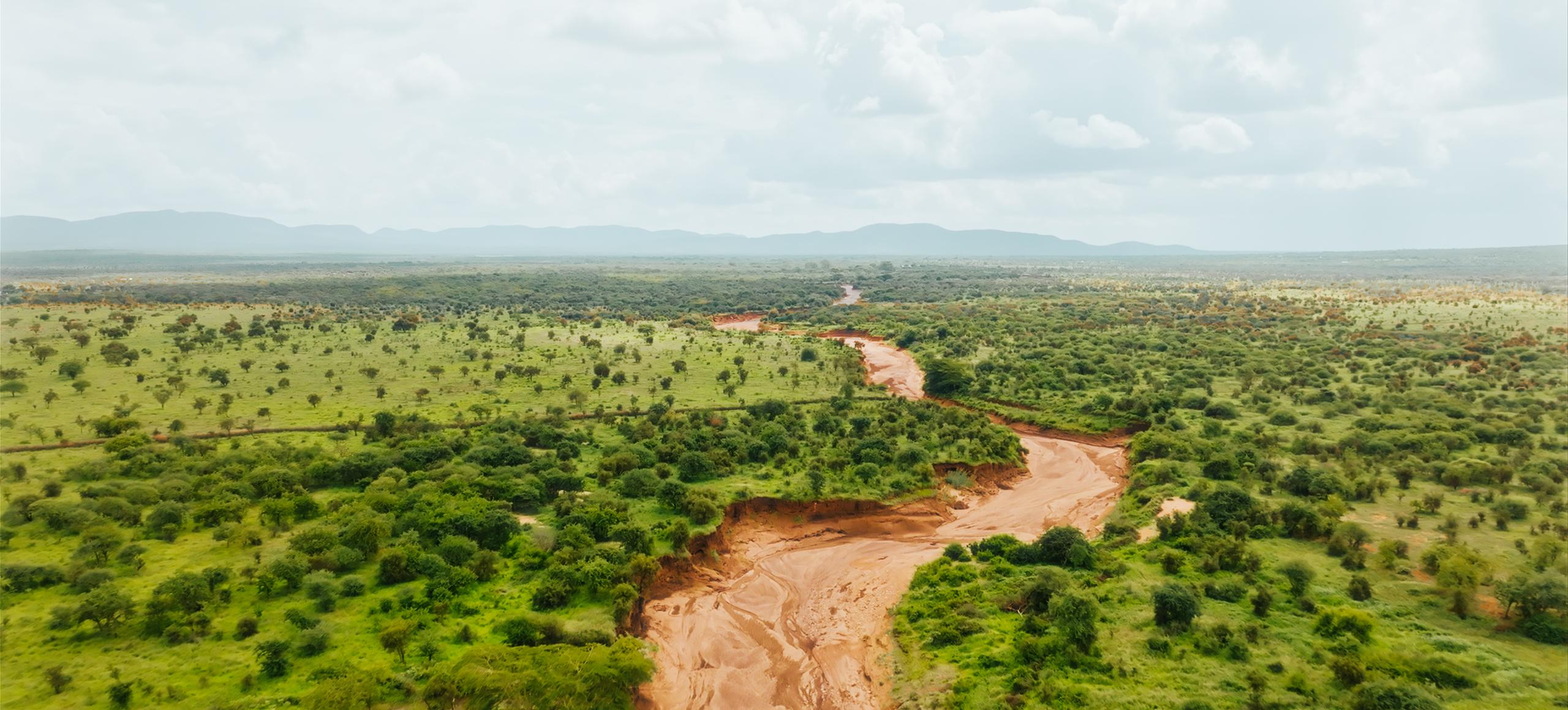
"Green islands in a sea of sand" was how the Ancient Egyptians referred to the fertile places where desert sand combined with water becomes an excellent feeding ground for an amazingly large variety of plant life. And indeed, luscious green and magnificent palm trees remind us of island paradises - only that here they are surrounded by an ocean of sand. What seems like a miracle is actually thanks to the variety of salts and minerals found within the tiny grains of sand and which release their wide range of nutrients for useful and ornamental plants just with water. Finally, favourable factors for growth such as warmth and light do their bit for the wealth of vegetation in oases, which primarily spring up at freshwater springs, on riverbanks or water veins where water passes through a desert landscape, either overland or under it, on its way to the sea. Oases can also occur in so-called wadis or desert river valleys, as is primarily the case in North Africa and the Middle East. Although they only carry water after heavy rainfall, thanks to their depth of up to 100 metres, they are a good catchment basin for the precious drops.
Impressive examples of the wondrous symbioses of water and sand can be found, for example, in the extremely dry Namib desert in Namibia: A short shower, and already the sparse desert landscape transforms into a real sea of flowers - if only for a short time. Presumably the seeds, that while away their existence there in the hot sand, are already several thousand years old. And yet, all they need is a small amount of water and nature takes its course. Incidentally, the two-leafed Welwitschia plant can also be found in the Namib, which in some cases can live for up to two thousand years and feeds itself via internal water stores and external moisture in the air.
It seems absolutely unbelievable when we consider the lavish abundance of fruit, vegetables and cereals the oasis economy produces, when land and fields can be directly irrigated by way of a canal system. Traditionally, land is cultivated on three levels. Cereals and all kinds of vegetables thrive best directly on the ground, while juicy fruits occupy the middle level, including pears, apples, lemons, oranges and peaches, as well as bananas and almonds. The third and highest level is reserved for date palms, which grow better the drier and hotter it is. While their roots grow up to 30 metres into the ground, their height offers shade for man and beast and they provide not only their valuable fruit, but also palm fronds and wood for use within the oasis or for export overseas. The export products are finally transported by camel caravans through the desert to the port cities. Camels are still the number one pack animal for the passage through the desert, because they can survive several days without food or water.
From myth to guesthouse in the desert
"You discover the true taste of water in the desert" (Israeli proverb)
Everyone is familiar with the image of the man dying of thirst who, completely exhausted, drags himself over the seemingly infinite, burning hot sand. And suddenly he sees a luscious green oasis, surrounded by palm trees and occupied by people. Just the thought of delicious, refreshing water gives him enough energy to reach the saving destination. As long as it is not itself a mirage. And thus even today, the myth of the oasis, which people like to associate with the optical phenomenon, has lost hardly any of its romantic magic. Thus the transfigured image of the paradise-like oasis appearing slowly on the horizon in literature and film is based on the stories of European explorers who portrayed their dearly longed-for arrival at these places after an adventurous journey through the desert as virtually heavenly. Even today, we can hardly escape this peculiar fascination, for when we enter some oases we really enter a world in which time seems to stand still, in between peaceful villages against the backdrop of charming palm groves. A leisurely pace reigns which even the pharaohs understood the importance of. It is said that they withdrew into the oases to recover from the turbulent way of life in the Nile valley.
Centre of trade or the Garden of Eden?
Populated oases have always been considered centres of culture and trade, which sometimes served whole desert regions. However, not every oasis can support human life. And a number of the naturally occurring green islands have now been completely consumed by the desert, while others have developed from traditional places for the exchange of goods by nomads and rest points for caravans into fully fledged metropolises, which are accessible to any Tom, Dick or Harry via modern transport links. Many oases have a long past steeped in history, while others will possibly only develop in the future. About five kilometres under the "bahr bei me", the "sea without water", as the Arabs call the Sahara, there is an enormous freshwater lake with a volume of more than 150,000 cubic kilometres of water. That correlates to a surface area of more or less 20,000 square kilometres. If we succeeded in bringing the "blue gofld" to the surface, the Sahara Desert could become a fertile garden of paradise - just with the elixir of life, water.
Legendary oases of the Earth
Turfan (China)
Turfan, Chinese: 吐鲁番地区, lies on the Silk Road's northern route in western China. The city is located in the world's second deepest depression, approximately 150 metres below sea level. The oasis city is irrigated by ancient subterranean canals and is home to 250,000 people over an area of just under 13,650 square kilometres. Its position in a mountain basin brings with it extreme seasonal differences in temperature and strong winds of at least force 12.
Dunhuang and Mogao Grottoes (China)
The old oasis city "Dunhuang", Chinese: 敦煌市,is also located on the Silk Road. It was founded in the year 111 BC. Alongside its significance as a place for cultural exchange and trade with the West, it also played an important role in the spread of Buddhism with the construction of the Mogao Grottoes, which are today a World Cultural Heritage Site. Between the 4th and 12th centuries, the monks living in the river oasis Mogao dug more than 1,000 caves in the sandstone rock and decorated them with Buddhist motifs.
Palmyra - Tadmor (Syria)
Palmyra, the so-called palm tree city, lies next to the small city of Tadmor, (Tadmur). It drew its precious water from the Efqa spring and was one of the most important oasis cities in the Roman Empire, which found economic success and political influence through the caravan trade. Here, luxury goods such as silk, spices, sandalwood and ivory were traded between East and West. Today, numerous ruins of the once grand buildings bear witness to the wealth of the ancient economic centre in Syria.
En Gedi (Israel)
The luscious oasis of En Gedi, which more or less means "Little goat's spring", is located on the west coast of the Dead Sea and delights visitors with its lush vegetation, if they actually get to it over the rocky passes. And it is precisely this inaccessibility that, according to the Bible, made it the perfect refuge for David when he was being persecuted by King Saul. David is said to have hidden in the caves of the mountains of En Gedi, which were home to the ibex, with his followers.
San Pedro de Atacama (Chile)
The oasis "San Pedro de Atacama" is currently home to just under 5,000 people, if we do not include the many tourists who visit the green island in the middle of the salt-rich Atacama Desert the whole year long. They go to see the many sights located around the oasis town, which itself has an excellent archaeological museum from which you can observe the flamingos. Alongside the nearby Moon Valley ("Valle de la Luna"), the famous El Tatio geysers, high up in the Andes, are a particular attraction, where visitors can enjoy a thermal bath at sunrise.
Oracle at Siwa (Egypt)
The "Siwa" oasis is the most western oasis in the Libyan Desert and encompasses, alongside the main town of Siwa, the villages "Aghurmi", "Abu Schuruf", "Kamisa", "Balad ar-Rum" and "Badi ad-Din". It is the only place in Egypt where Berber is spoken and its history goes back to 1500 BC. The oasis' fascination stems from the mystery of the legendary Oracle of Siwa, whose prophecies were known beyond the borders of the Kingdom of the Pharaohs. Even Alexander the Great made use of the Oracle's power and had himself crowned Pharaoh in the Oracle's sanctuary.
Timbuktu (Mali, West Africa)
For centuries, the oasis city of Timbuktu, French: Tombouctu, was considered the proverbial fata morgana. It was said to be always very far away or even impossible to reach. This also provides the basis for today's use of the word in the German and English languages as a term to describe somewhere an unknown distance away. However, Timbuktu actually means "Buktu's well", for according to historical sources, the city was founded by a well around the year 1000 by the Tuareg as a trade settlement. According to the legend, "Bouctou" was a slave girl who had to stay in the village to guard the well with a herd of goats.